

Chronic Pain Treatment Rooted in Modern Neuroscience
Clinically-proven psychotherapy for chronic pain that hasn’t responded to traditional treatment.
Who This is For
You may be experiencing:
- Back, neck, or shoulder pain
- Migraines or tension headaches
- Fibromyalgia or widespread pain
- Other types of physical discomfort
You may have already:
- Seen multiple doctors
- Tried physical therapy or medication
- Received negative or inconclusive test results
- Been told “everything looks normal”

If this sounds familiar, there is a different way to approach pain.
A New Direction in Chronic Pain Treatment
For years, chronic pain was treated as a purely physical problem.
Research now shows pain often continues because the brain has learned to keep producing it — even after the body has healed.
In fact, 90–95% of all chronic pain is now understood to be brain-based rather than a sign of ongoing tissue damage — meaning it can be treated purely through psychological therapies that retrain the brain.
New therapies now help retrain the brain and reverse chronic pain, including:
— Pain Reprocessing Therapy (PRT)
— Emotional Awareness and Expression Therapy (EAET)
Most people in clinical studies became pain-free or nearly pain-free, with lasting results.



How This Treatment Works
This work is psychological and focuses on the brain processes that generate chronic pain.
Sessions are primarily talk-based and focus on:
Ways to Work With Me

Psychotherapy (Florida Only)
Licensed clinical treatment provided in-person in Melbourne, FL and virtually to residents throughout the state.

Pain Recovery Coaching (Nationwide)
Neuroscience-informed pain recovery coaching conducted virtually to clients nationwide.
Why Work With Me
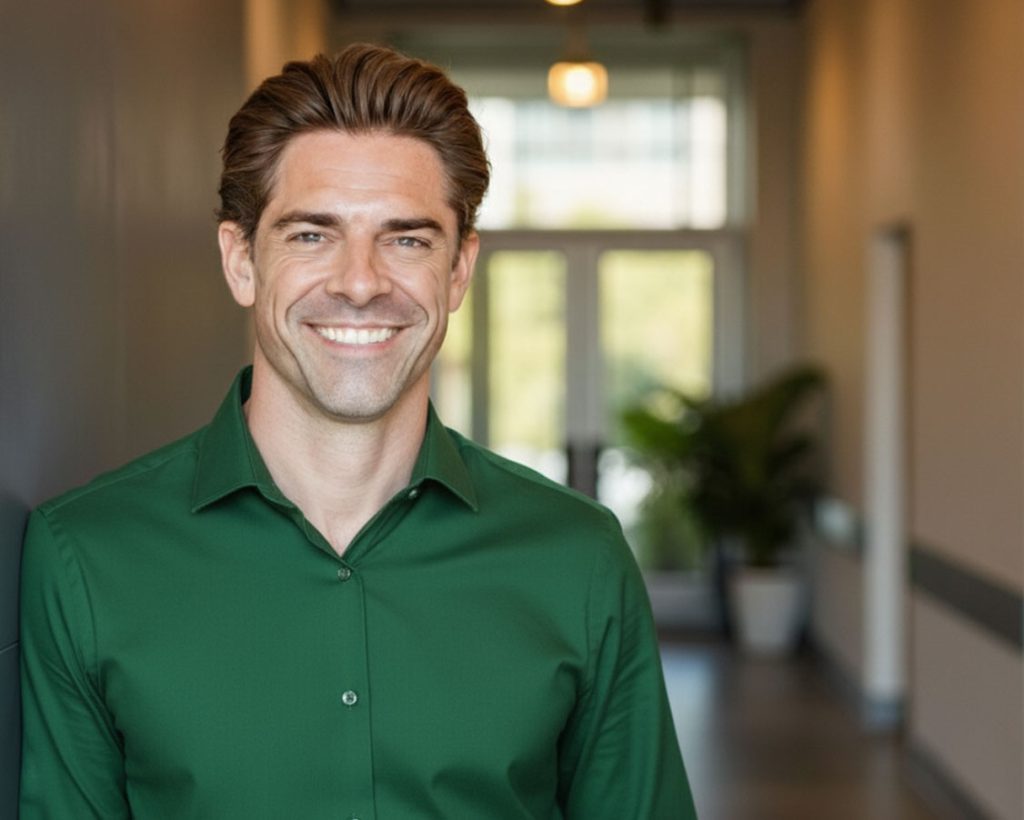
Hi, I’m Blair Golson.
I’m a chronic pain recovery specialist at LiveWell Behavioral Health, a multiple award-winning mental health practice in Melbourne, FL.
Around 75-80% of my clients experience significant and long-lasting recoveries from chronic pain.
Here’s a bit about my background:
— Bachelors of Arts, Yale University
— Masters of Social Work, The Ohio State University
— Certified practitioner of Pain Reprocessing Therapy
— Specialized training in Emotional Awareness and Expression Therapy
— Personal recovery experience with chronic pain
Frequently Asked Questions
How can a psychotherapist help with physical pain? Isn’t pain a medical issue?
Chronic pain is absolutely real — and medical evaluation is always important. Many of my clients have already seen physicians, specialists, had imaging, tried physical therapy, injections, or medication.
What we now understand from neuroscience is that some forms of chronic pain are not caused by ongoing tissue damage, but by the nervous system staying stuck in “danger mode.” The brain can continue sending pain signals long after the body has healed — or even without a clear structural cause.
This doesn’t mean the pain is imagined. It means the brain has learned to interpret certain signals as threatening.
In therapy, we work on retraining the nervous system to feel safe again. When the brain no longer believes the body is in danger, it can stop producing persistent pain signals. This approach is based on modern pain science and is increasingly supported by research.
Are you saying my pain is “all in my head”?
No.
Pain is always generated in the brain — that’s true for a broken bone and for chronic back pain. But that does not mean it’s psychological, made up, or under your conscious control.
Think of it like a smoke alarm. Sometimes smoke alarms go off because there’s a real fire. Other times they go off because someone burned toast. The alarm is loud either way.
For some people with chronic pain, the alarm system has become overly sensitive. The work we do is not about dismissing your pain — it’s about helping your brain accurately interpret what’s safe and what isn’t.
Your pain is real. The question we explore is: is your nervous system stuck in a protective loop that is no longer serving you?
How long does this take? I’ve already tried so many things.
That’s a very understandable question.
The timeline varies depending on how long you’ve had pain, how much fear or avoidance has built up around it, and how sensitive your nervous system has become overall.
Some people begin to notice shifts within weeks — especially once they understand how pain works and begin responding to it differently. For others, especially those with longstanding pain or high life stress, the process is more gradual.
This is not about “managing” pain forever. The goal is retraining — changing the underlying pattern. That takes repetition and consistency, but it does not require years of weekly therapy for most people.
We will regularly evaluate progress together and adjust the pace as needed.
What if my pain really is structural? Could this make things worse?
Before beginning this work, it’s important that serious medical causes have been evaluated by appropriate providers. I do not replace medical care — I complement it.
Many chronic pain conditions are actually a mix of structural and nervous-system amplification. Even when there is some structural issue present (which is common in adults and often not dangerous), the nervous system can still amplify pain beyond what the tissue damage would predict.
This approach is designed to reduce fear and increase safety in the body — not push through injury. We move gradually. If something feels destabilizing, we slow down.
The goal is not to convince you that nothing is wrong. The goal is to help your nervous system stop overprotecting you.
Is this my fault? Did I cause my pain by being stressed or emotional?
Absolutely not.
Chronic pain driven by the nervous system is not a character flaw, a weakness, or something you consciously created. The brain’s job is to protect you. Sometimes it simply becomes overprotective.
Many people with chronic pain are high-achieving, responsible, caring, and driven. Those strengths can also mean your nervous system has spent years on high alert — trying to anticipate problems, meet expectations, or push through stress.
This work is not about blaming you for your pain. It’s about helping your nervous system update outdated danger signals so it no longer has to protect you in this way.
Your pain developed for a reason. And it can also change for a reason.
What if I try this and it doesn’t work?
If you’ve lived with pain for a long time, it makes sense to be cautious about hope.
This approach is not about forcing pain to go away or pretending it isn’t there. It’s about changing your relationship to the pain and reducing the fear and threat signals that keep it activated.
Sometimes pain fluctuates before it improves. Sometimes progress is nonlinear. We move at a pace that feels steady and safe, not overwhelming.
If your pain has a strong nervous-system component, this work can create meaningful change. If along the way we determine something else needs attention — medical, physical, or interdisciplinary support — we adjust.
You are not locked into a single explanation. We stay collaborative, curious, and grounded in evidence.
You Do Not Have to Keep Living With Chronic Pain
A new model of treatment is available.